
 409-842-4404
 Pipe End Preparation for Weld-Ready Bevels
Key Takeaways
- Weld quality starts at the pipe end, and inconsistent manual prep throws off root gap alignment, which drives NDT failures and rework.
- Cold, machined end prep removes the fire watches and permits of hot work and eliminates the heat-affected zone that thermal cutting leaves behind.
- Machined prep lowers the operator skill floor, which matters as the industry heads toward a shortage of roughly 330,000 welding professionals by 2028.
- A machine for heavy-wall pipe needs rigidity, secure hydraulic clamping, repeatable geared feeds, and carbide tooling.
- MSI’s shop-based C5H and C8H ChamferMate machines bevel pipe up to 5 inch and 8-3/4 inch OD with clean, weld-ready 37.5 degree bevels, and are proven for petrochemical fabrication and weld coupon production.
Every good weld starts at the pipe end. If the bevel and the fit-up are not right, the weld that follows fights it the whole way. Machined pipe end preparation, which cuts and bevels the pipe cold with carbide tooling, gives you a consistent, code-ready bevel every time and cuts the rework that torch-and-grind prep creates. For fabrication shops and spool shops under schedule pressure, that consistency is what keeps welders moving and keeps parts passing inspection.
This guide covers why weld prep is so often the bottleneck, how cold machining beats thermal cutting, and what to look for in a machine built for heavy-wall pipe.
Why Weld Prep Becomes the Bottleneck
Replacing or fabricating heavy-wall pipe means hundreds, sometimes thousands, of precise welds, and the whole sequence waits on the pipe ends being ready. If prep is slow, welding stalls. If prep is inconsistent, the delays compound as welders fight to fit, tack, and weld poorly mated joints.
The foundation of a clean, code-compliant weld is the root gap. When pipefitters bevel by hand with torches and grinders, a perfectly uniform angle and land is nearly impossible. Inconsistent joint angles throw off root gap alignment, and welders have to compensate during the root pass. That poor fit-up raises the risk of lack of fusion, porosity, and slag inclusion. Since process piping is inspected hard, usually with radiography or ultrasonic testing, a bad weld means gouging it out, re-prepping the pipe, and welding it again. Precise end prep removes those variables so joints fit right the first time and pass inspection without the rework loop. For the fundamentals, see our overview of pipe bevel angles and our guide on how to bevel a pipe.
Hot Work vs. Cold Machining
Traditional prep leans on hot work: flame cutting, plasma, and heavy hand grinding. All of it throws sparks and heat, which means hot-work permits, fire blankets, and dedicated fire watches. That setup consumes manpower and delays the start of real fabrication.
Thermal cutting also creates a metallurgical problem, the heat-affected zone. The intense heat changes the microstructure of the base metal, which is a real concern with the high-strength alloys and stainless common in this work. To meet code, that compromised metal has to be ground away before welding, which adds hours per joint.
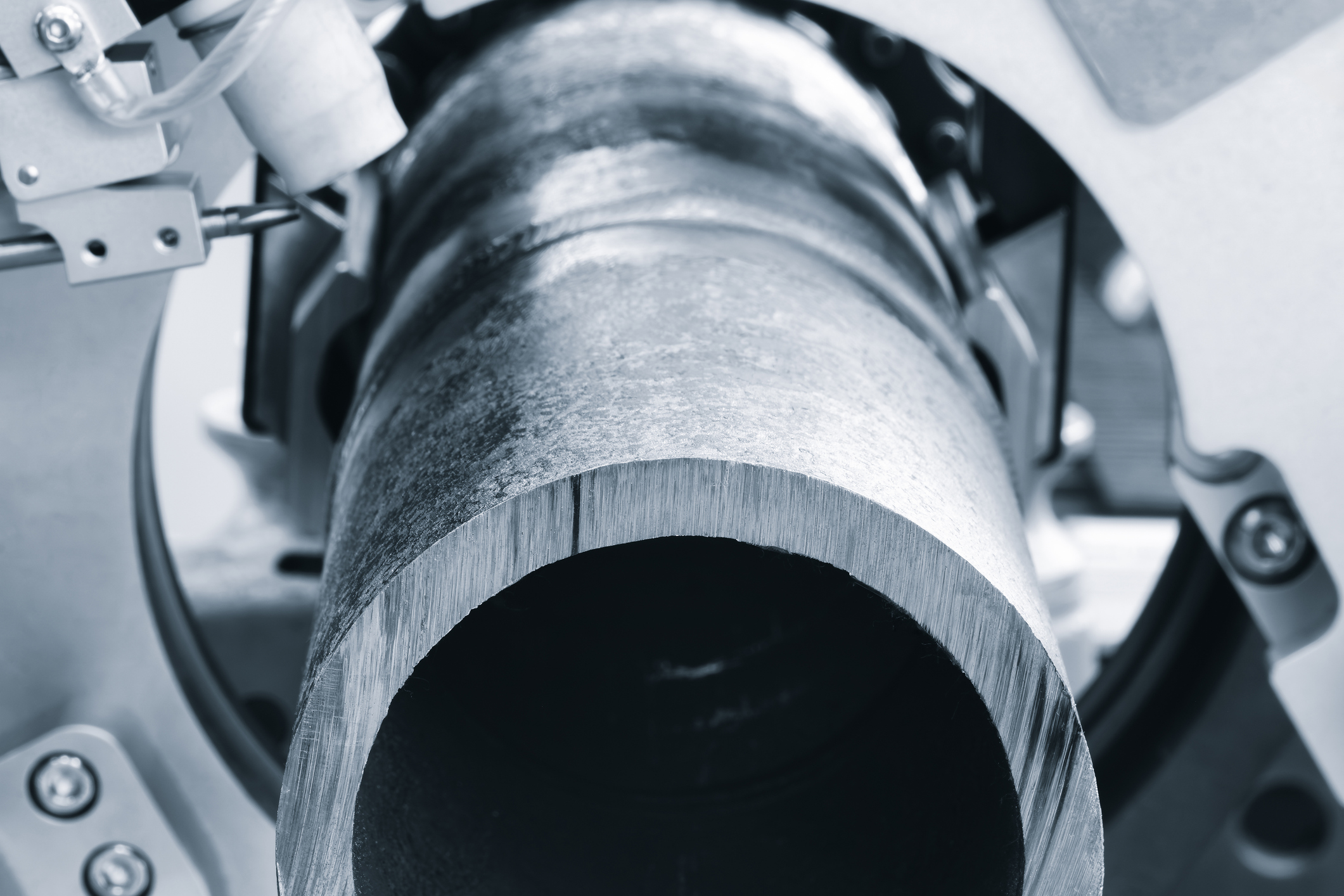
Cold, machined pipe end preparation is the better path. A machine using hardened carbide tooling cuts and bevels the pipe at the same time without sparks and without altering the grain structure. That avoids the permitting hassle of open flames, eliminates the heat-affected zone, and leaves a clean, consistent surface that is ready to weld. Our comparison of machine versus manual pipe beveling breaks down the time and quality difference in more detail.
The Skilled Labor Crunch
The trades are short on people. The American Welding Society projects a need for roughly 330,000 new welding professionals by 2028, with tens of thousands of openings to fill every year, and the average welder is now in their mid-fifties. Finding enough seasoned pipefitters to hand-prep and fit joint after joint is no longer a reliable plan.
Machined prep helps directly. It lowers the skill floor while raising the quality ceiling, so a less experienced operator can produce a clean, code-compliant 37.5 degree bevel more consistently than a veteran with a hand grinder. That standardizes output across your whole crew, and when every pipe end is prepped to the same tolerance, the welding phase itself gets faster and less stressful for the welders you do have.
What to Look For in a Machine for Heavy-Wall Pipe
Not every beveling tool survives heavy-wall work. Thick alloy pipe takes real torque to cut cleanly, and a machine that lacks rigidity will chatter, destroy inserts, and leave a jagged finish. Look for:
- A rigid, heavy-duty build that resists vibration under load.
- Secure hydraulic clamping that locks the pipe in the machine so the cut stays concentric.
- Repeatable, geared feeds that produce the same bevel and land every cycle.
- Carbide insert tooling for clean cuts and long tool life, with the flexibility to run standard bevels and J-bevels.
- Fast cycle times that keep the prep station ahead of the welders.
Machines like this are shop based. You bring the pipe or spool to the machine, clamp it, and let the geared feed do the work, which is what delivers the concentric, mirror-smooth bevel that fits up perfectly.
Pipe Weld Prep with MSI ChamferMate Machines
MSI’s ChamferMate pipe beveling machines are built for exactly this kind of shop-based weld prep. They clamp the pipe hydraulically, run a heavy-duty spindle on machine-tool linear rails, and cut cold with carbide inserts, so there is no heat-affected zone and no fire watch. Cycle times typically run 12 to 20 seconds, which is significantly faster than portable beveling units or hand grinding and torching.
Two models cover most heavy-wall work. The C5H ChamferMate bevels thick-walled pipe and tubing up to 5 inch OD and also chamfers large solid bar. The C8H ChamferMate is the most robust machine in the lineup, with a 20 HP hydraulic system that bevels heavy-wall pipe up to 8-3/4 inch OD. Both use interchangeable grips for different pipe sizes and standard carbide inserts, and both produce clean 37.5 degree V-bevels and J-bevels for weld prep.
These machines are widely used in pipe fabrication and petrochemical work, and they are a proven choice for producing weld test and training coupons in UA pipefitter apprenticeship programs, trade schools, and community colleges. If your prep needs run larger than the standard range, MSI also builds custom ChamferMate machines to your parts and specifications, all made in the USA. Our pipe beveling machine guide compares the options in more depth.
Prep Weld-Ready Pipe Faster
Consistent, machined pipe end prep protects your weld quality, cuts NDT rework, and takes pressure off a thin labor pool. If your shop preps heavy-wall pipe or builds weld coupons, contact MSI’s team for a quote or a recommendation on the right ChamferMate for your pipe sizes and volume. You can also review real-world uses on the pipe beveling applications page.