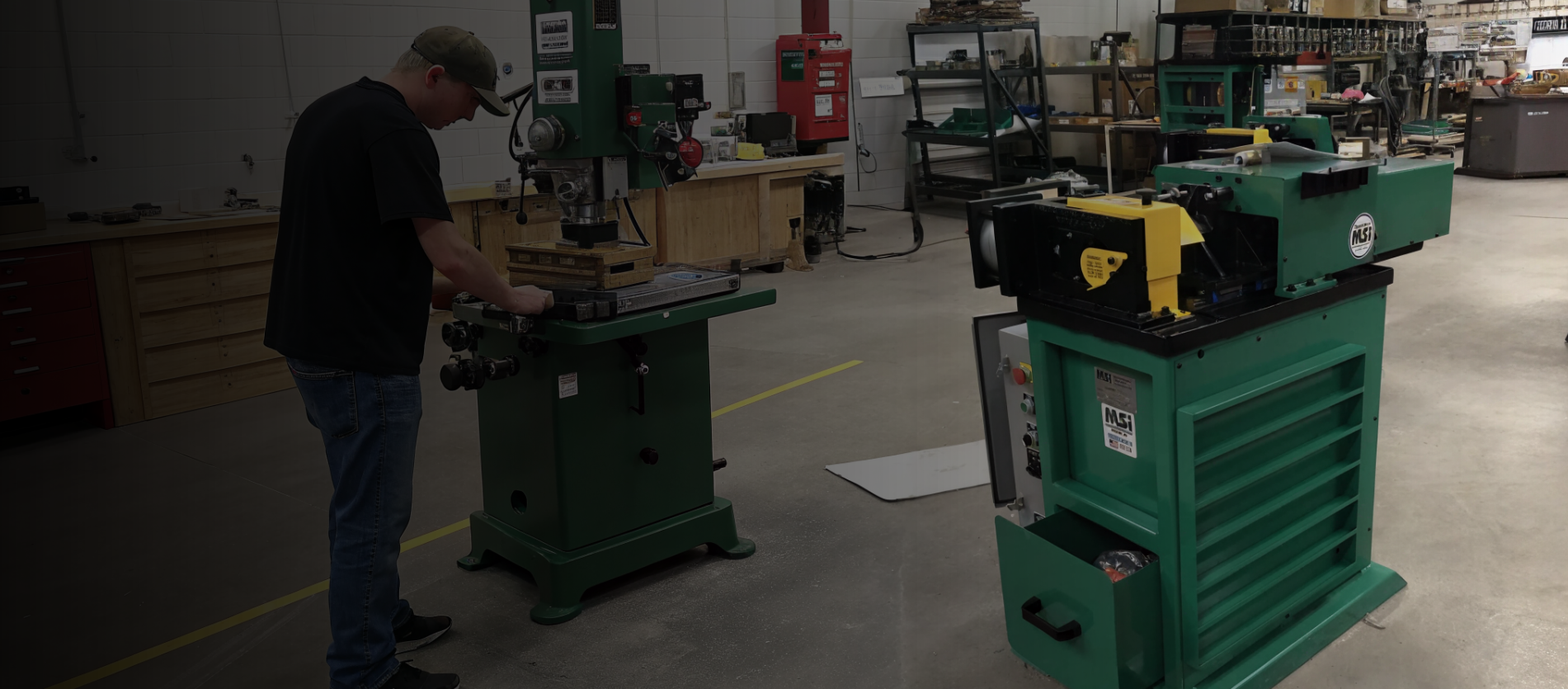
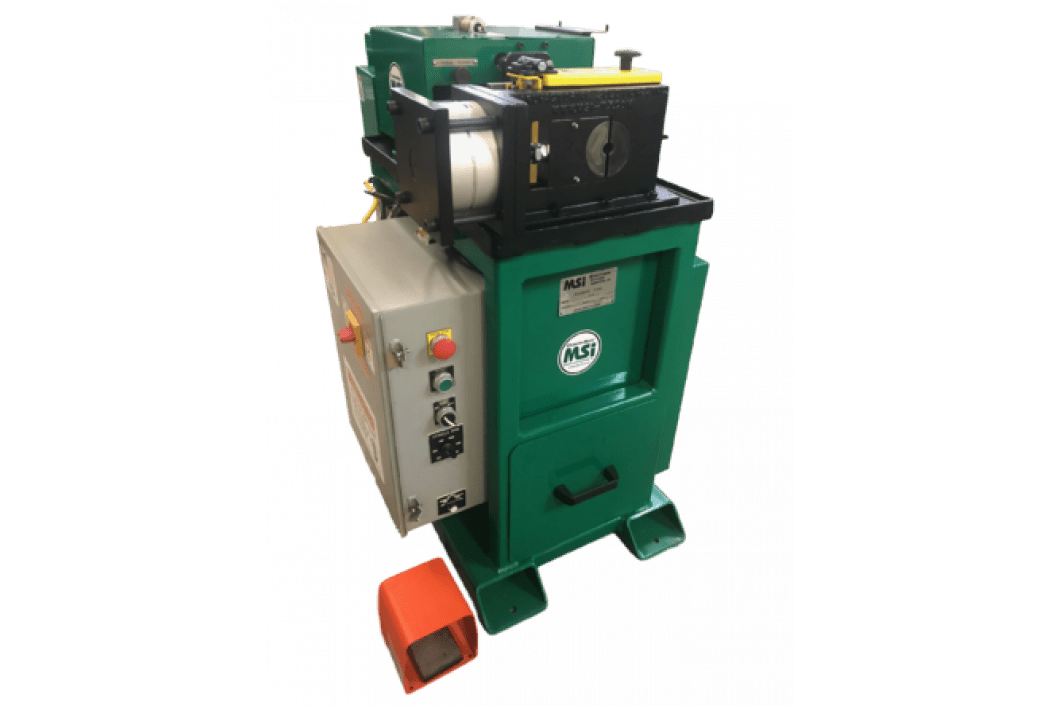
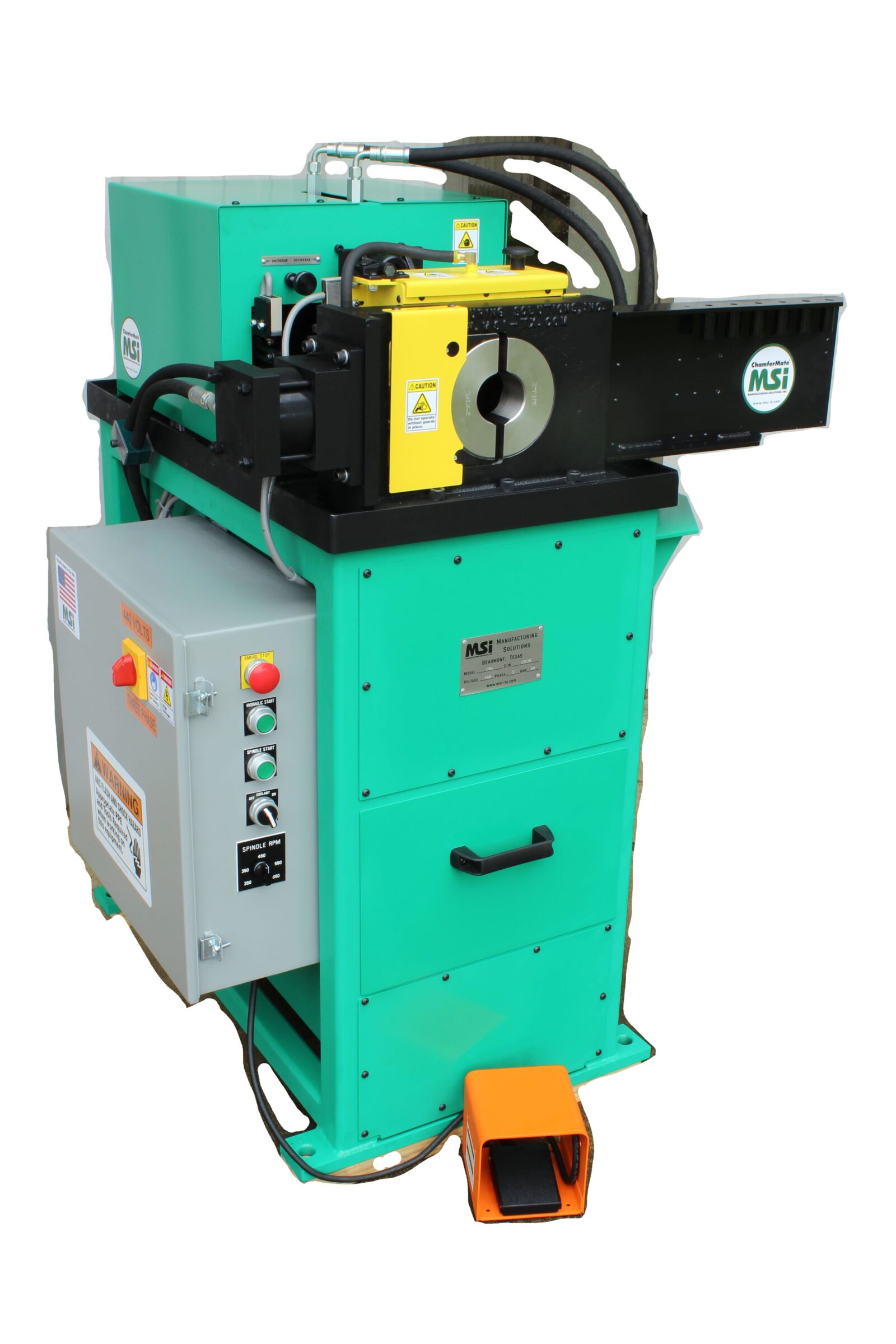
With your workforce changing, you need reliable machines that are easy for anyone to operate. Don’t waste time with hours of training – with automated pipe beveling and chamfering machines, your team can get to work or fill in for each other right away.

  • Say goodbye to hand-grinding or torching
  • Increase production speed with automation
  • Improve safety and reduce fatigue for your work
  • Lower operating costs and maintenance with durable, reliable machines

Call us today and find out which one is best for you.

Automate Your Beveling

Icon - Customized

Customized and
Made to Order

Our engineers will find the best machine for your application and fit it to your factory floor perfectly.

Icon - Minimal Training

Minimal Training
Required

If someone calls out sick one day, anyone can use our machines to finish the day’s work.

Improve
Speed

You’re buying a machine to improve efficiency, and we have the best pipe beveling and chamfering machines on the market.

Icon - Made in the USA

Made in
the USA

All of our machines are made in Beaumont, Texas, and delivered around the globe

Our Pipe Beveling & Chamfering Machines

Choose the right machine for your process:

About Our Pipe Beveling and Chamfering Machines

You don’t need another labor-intensive machine that continually breaks or requires replacement. View the spec sheet below to ensure you get exactly what your factory needs.

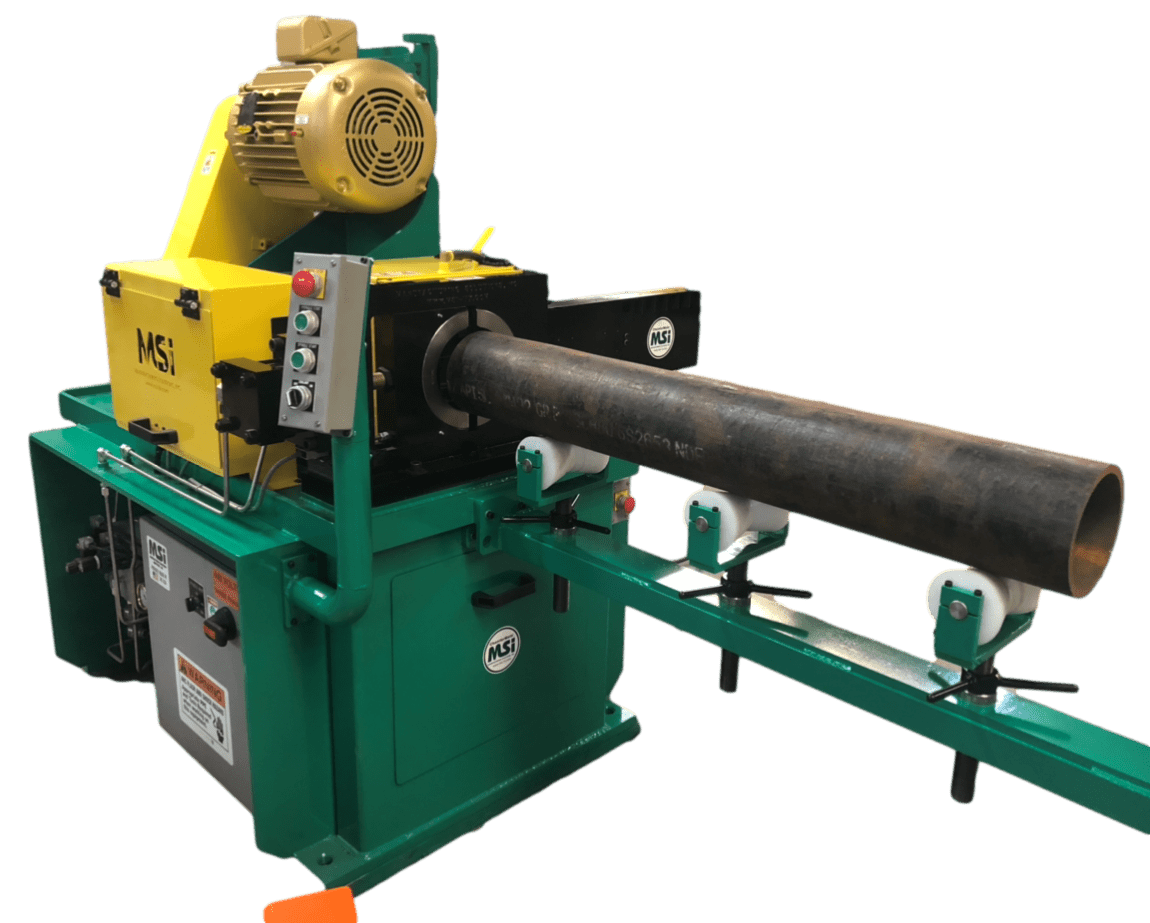
  • Machines available for diameters up to 8″ OD pipe or tubing
  • Adjustable cutter head quickly set with gauges
  • Uses standard off-the-shelf carbide inserts. Tooling is available for custom angles and J-bevels
  • Interchangeable grips for different-sized pipe or tubing
  • Electronic variable-speed drive
  • Heavy-duty spindle that rides on machine tool-type linear ball rails
  • Totally enclosed cutting area to protect the operator
  • Large chip drawer for easy waste removal

Durable and Easy to Use

At MSI, we know you’re looking for efficiency and durability. Not only do you want a machine that works quickly, but it also needs to last for decades, so you’re not spending time or money on replacements. But you’re also concerned about your workforce. With experienced operators and engineers retiring, you have a new workforce coming onto your factory floor, and you need to train them fast.

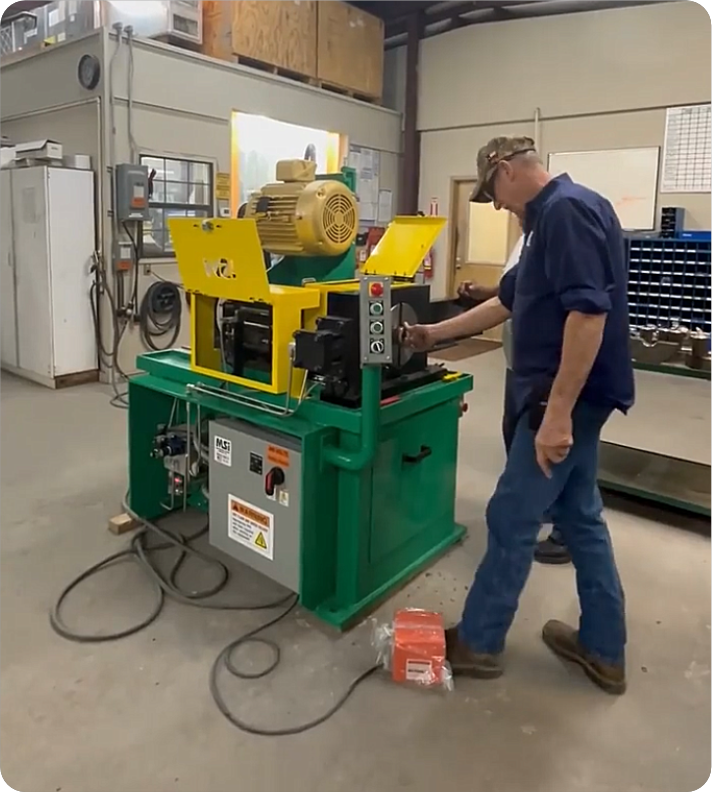
MSI pipe beveling and chamfering machines achieve all of those goals: they’re faster and safer than hand-grinding and torching. They’re durable for decades with minimal repairs, and most only require a foot pedal to operate.

Ready to add that Safety Green to your machine lineup? Here’s how you get started:

Ready to order your machine?

Here’s how we make sure you get what you need:

First, tell us
what you need

Tell us about your product and current manufacturing process, and then our engineers will get to work finding the right solution for your specific needs.

01

Next, order your
machine

All machines are made to order, and we’ll offer different options for tooling or sizes that will fit in your space.

02

Finally, we’ll deliver your
machine!

We offer phone support for training after delivery, but our semi-automated machines are easy for anyone to operate.

03

So, request a quote today.

And in the meantime, watch our many YouTube videos to see how simple operation can be with an MSI machine.

Frequently Asked Questions

What's the difference between pipe beveling and chamfering?

Both create an angled edge where two surfaces meet, so the terms get used interchangeably a lot. The real difference is the angle and the purpose. A chamfer is usually a 45-degree cut to deburr an edge or make parts easier to assemble, while a bevel is cut at other angles (37.5 degrees is common) to prep a pipe end for welding. Our ChamferMate machines handle both, so one machine covers your weld prep and your edge finishing.

Why should I bevel a pipe before welding it?

A beveled end gives the weld somewhere to go. The angled groove lets the filler material reach the full thickness of the pipe wall instead of just sitting on the surface, and that’s what gives you a strong, clean joint. Uneven hand-cut bevels are one of the most common reasons welds come out weak, so a consistent bevel on every part makes a real difference in your finished product.

What size pipe and tubing can your machines handle?

Our lineup covers 3/8″ all the way up to 8-5/8″ OD. The compact C3A-M and C3A handle parts from 3/8″ to 3″, the pneumatic C5A and hydraulic C5H go up to 5″ OD, and the heavy-duty C8H takes thick-walled pipe and tubing up to 8-5/8″. If your parts fall outside that range or you’ve got an unusual setup, we also build custom machines.

What materials can a ChamferMate bevel or chamfer?

They run carbon steel, stainless, aluminum, and most alloys, plus solid bar and studs, not just hollow pipe and tubing. The machines use standard off-the-shelf carbide inserts, so it’s easy to match the tooling to whatever you’re running. Send us a sample part or a drawing and we’ll confirm the right setup for your material.

Can your machines cut J-bevels or custom angles?

Yes. The standard chamfer angle is fixed, but we make custom tooling for just about any requirement, including J-bevels, compound bevels, and radii on both the inside and outside diameter. If you have a print with a specific weld prep callout, we can build tooling to match it.

Is an automated machine really better than hand-grinding or torching?

For repeat work, it isn’t close. Hand-grinding and torching are slow, messy, and depend on the operator’s skill, so your bevels come out a little different every time. An MSI machine gives you the same clean bevel on every part, runs faster, and is safer with no open flame or grinding sparks. Most of our machines run off a simple foot pedal, so a new hire can step in and get consistent results without a long training curve.

How do I know which ChamferMate is right for my parts?

Start with your part size, wall thickness, and material. Lighter parts and thin-walled tubing usually fit the C3A-M, C3A, or pneumatic C5A, while thick-walled pipe and heavier parts call for the hydraulic C5H or C8H. The simplest path is to tell us about your parts and current process, and our engineers will point you to the right model. You can also check our comparison table to see the whole lineup side by side.