
 409-842-4404
 Bolt Cross Drilling for Safety Wire: When to Automate
Key Takeaways
- Manual drilling of safety wire holes drives operator fatigue, inconsistent feeds, and costly tool breakage inside hard alloy fasteners.
- When the combined cost of broken bits, scrapped fasteners, and lost labor passes the cost of a dedicated machine, manual methods are losing money.
- Offloading cross-drilling to a dedicated machine protects expensive CNC spindle time for complex, high-margin work.
- Controlled feed, reliable chip clearing, and non-marring clamping are what keep small-diameter bits from breaking and threads from marring.
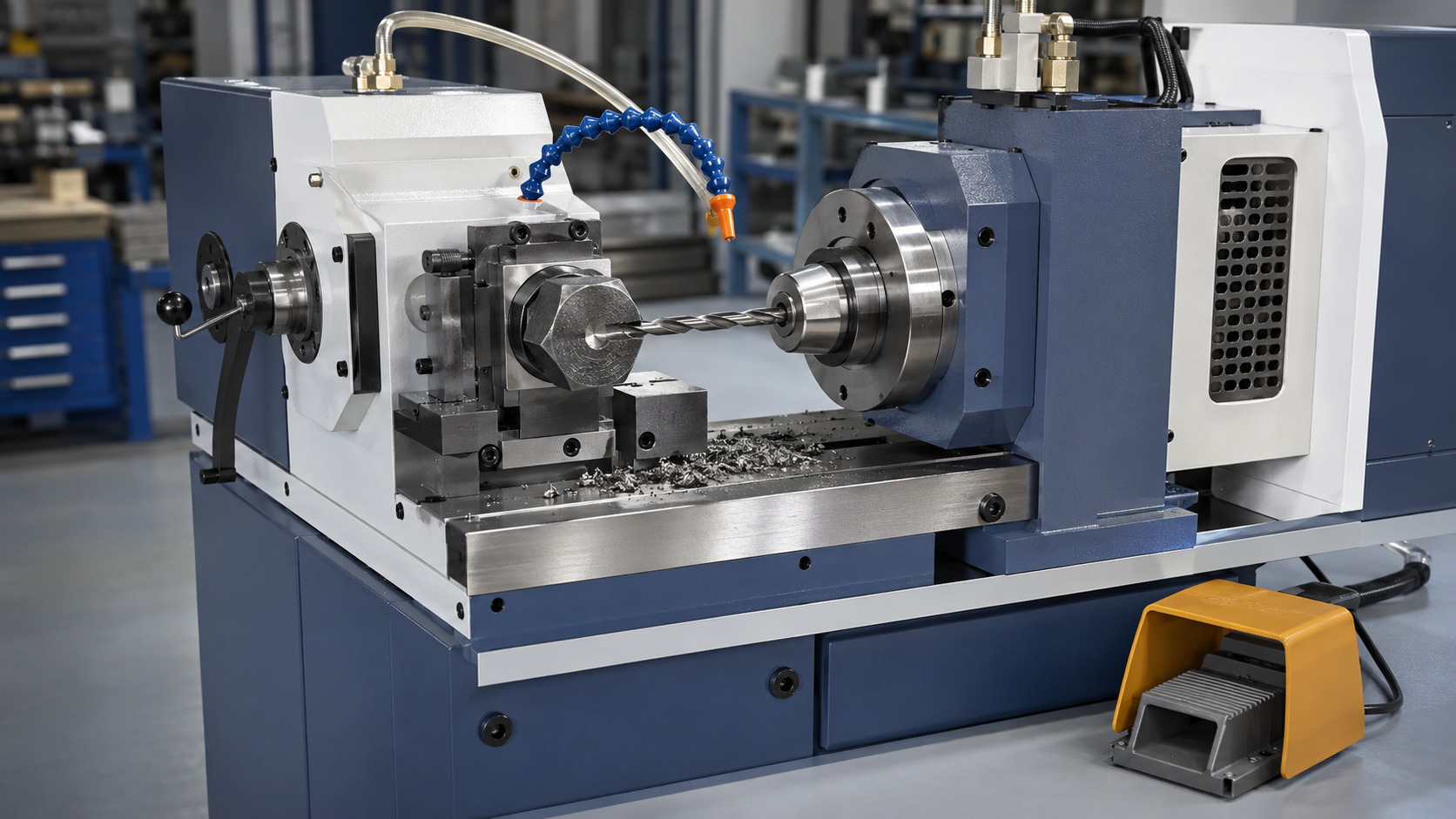
- The MSI DrillMate is a foot-pedal, built-to-order machine that drills hex, socket, 12-point, and round heads up to 2 inches with custom tooling.
Producing drilled bolts for safety wire at volume is a well-known bottleneck. Aerospace, motorsports, and defense all rely on safety wiring to keep fasteners from backing out under heavy vibration, but drilling those cross-holes is harder than it looks. Hitting the corner of a hex or socket head on a curved surface invites drill walk, tool deflection, and rapid work-hardening.
Most shops start with manual drill jigs, V-blocks, and a standard drill press. That is fine for one-off jobs and low-volume runs. As demand grows, manual methods turn into a liability. Knowing the exact point where they stop paying off is what protects your margins. Moving to a dedicated cross-drilling machine is not only about speed. It is about eliminating scrap, protecting your expensive machines, and getting the same result every time.
Why Safety Wire Cross Drilling Bogs Down Production
The trouble comes from tight tolerances combined with hard materials. Safety-wire fasteners are rarely mild steel. They are usually titanium, Inconel, or high-strength alloy. Push a small-diameter bit through those on a manual press and the margin for error nearly disappears.
Manual setups lean hard on operator skill and feel. The operator has to clear chips, manage cutting fluid, and judge the feed rate to keep the material from work-hardening. Too slow and the bit rubs and hardens the alloy. Too fast and the fragile bit snaps inside the head. On top of that, hand jigs and V-blocks often fail to hold the threaded portion well enough, which marks the threads and rejects the part. At production volume, a simple cross-hole turns into a real bottleneck.
Three Signs It Is Time to Automate
Production managers need concrete triggers to justify capital equipment. The move from a manual fixture to a dedicated machine usually comes down to three failures.
Volume and Operator Fatigue
When batches grow from dozens to thousands, manual drilling drains your skilled labor. A machinist pulling a quill for hours is a poor use of a valuable person, and fatigue leads to inconsistent feeds, missed centerlines, and falling throughput. If you are turning away high-volume orders or paying overtime just to keep up with cross-drilling, automation is the logical next step.
Scrap Rates and Drill Breakage
Tool breakage is the fastest way to lose money here. A tiny bit that snaps off inside a costly alloy fastener is often impossible to extract, which turns a high-dollar part into scrap. Add up the replacement bits, the scrapped fasteners, and the lost labor. When that monthly loss passes the financing cost of a dedicated machine, manual drilling is officially costing you more than it saves.
Quality Rejects and Specification Failures
Aerospace and defense work demands precise hole placement that does not compromise the head. Manual setup errors lead to bit walk and off-center holes. If your quality team keeps rejecting batches for dimensional problems or thread damage from poor clamping, it is time to take human error out of the process.
Why Not Just Use a CNC Mill?
A common objection is that the shop already owns a multi-axis CNC that can drill the holes. It can, but using it that way is rarely the economical choice. Tying up a machine worth hundreds of thousands of dollars on a simple, high-cycle drilling job hurts your overall equipment effectiveness. That spindle should be earning its keep on complex, high-margin work.
Offloading cross-drilling to a dedicated machine frees your CNC to generate revenue while a purpose-built machine handles the repetitive holes at a fraction of the operating cost. It is the same logic behind pairing a dedicated bolt shortening tool or bolt chamfering tooling with your primary equipment instead of overloading one machine.
What to Look For in a Dedicated Cross-Drilling Machine
A general-purpose drill is not enough. The machine has to solve the specific pain points of fastener work:
- Non-marring, repeatable clamping that holds the fastener rigidly during drilling but protects precision-rolled threads.
- Interchangeable tooling so you can switch quickly between hex, socket, 12-point, and round heads without long setups.
- Adequate capacity for the fasteners you run, including larger diameters.
- Controlled feed and reliable chip clearing to keep coolant reaching the cutting edge, which is the single best way to extend bit life and prevent breakage in small-diameter holes.
- Simple operation so a standard operator can run it without CNC programming.
How the MSI DrillMate Solves It
The MSI DrillMate is built to sit between an inefficient manual jig and an overqualified CNC mill. It gives shops a dedicated way to scale drilled bolts for safety wire without a massive capital outlay.
Operation is simple: the operator lines up the bolt, presses the foot pedal, and the machine takes over, so anyone can run it without lengthy training. With custom tooling, the DrillMate drills regular and heavy hex heads, socket heads, 12-point bolts, and round bar, and it is powerful enough to drill up to 2 inches on repeat. Each machine is built to order from high-quality steel for durability and low maintenance, and it keeps a compact footprint so it fits your floor. That combination of controlled operation and rigid tooling is what keeps small-diameter bits alive and holds every fastener to spec.
The Standards Behind Safety Wire Holes
In aerospace and defense, hole placement is regulated so the structural integrity of the head is not compromised. Safety wiring practice is covered in FAA Advisory Circular 43.13-1B, Chapter 7, and drilled-head fasteners are called out in the AN drilled-head bolt series and related NAS specifications, with lockwiring practice defined in NASM33540. The takeaway for production is simple: these holes have to be placed accurately and cleanly, and repeatable machine clamping does that far more reliably than a hand jig.
Streamline Your Fastener Production
Relying on manual drill presses and hand jigs for safety wire holes is a hidden tax on your floor, between broken tooling, drained labor, and quality rejects. A dedicated machine protects your margins, frees your CNC spindle, and gives you repeatable results. Look at your current volume, labor cost, and scrap rate, then contact MSI for specs and a quote on a DrillMate for your shop. You can also explore the full machine lineup for the operations around drilling.