
 409-842-4404
 Rod Chamfer Techniques: Improving Safety and Assembly in Metal Fabrication
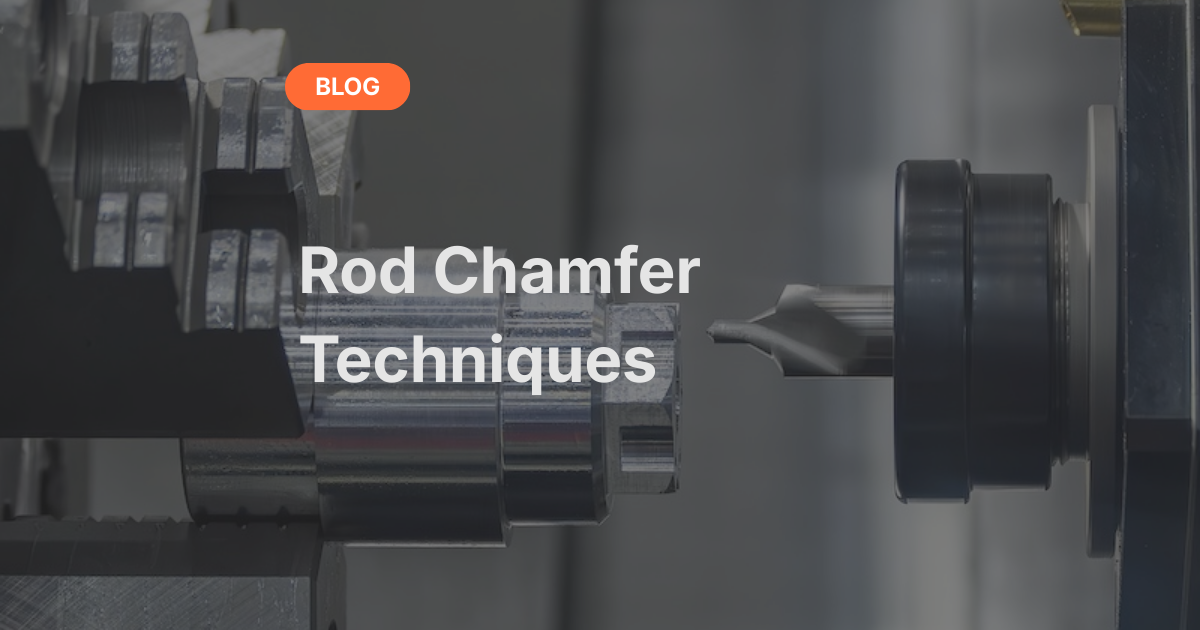
Sharp edges on metal rods create more than just manufacturing challenges—they pose genuine safety risks to workers and can compromise assembly quality throughout your production process. Chamfering rod ends transform dangerous sharp edges into smooth, angled surfaces that protect personnel, facilitate easier assembly, and improve the professional appearance of finished products. Understanding the techniques and equipment available for creating consistent rod chamfer profiles helps manufacturers optimize both safety and operational efficiency.
Why Chamfering Matters in Metal Fabrication
The benefits of properly chamfered rod ends extend throughout your manufacturing operation. Sharp rod edges can cut workers during handling, snag on protective gloves, and create hazardous conditions in shipping and receiving areas. Beyond safety concerns, unchamfered rods resist insertion into holes, fittings, and assemblies, slowing production and potentially damaging mating components.
Chamfered edges guide rods smoothly into position during assembly operations, reducing force requirements and minimizing the risk of cross-threading or misalignment. This seemingly simple edge treatment prevents costly mistakes, reduces scrap rates, and improves first-pass assembly success rates across diverse manufacturing applications.
Manual Chamfering Techniques
For low-volume operations or prototype work, manual chamfering methods offer flexibility without significant equipment investment. Hand files and deburring tools allow operators to create consistent edge breaks on individual pieces, though this approach requires skilled labor and introduces variability between operators.
Belt sanders and bench grinders provide faster manual processing for small batches. These methods work well when:
- Production volumes don’t justify automated equipment investment
- Part sizes or geometries vary significantly between jobs
- Immediate turnaround is needed for custom or prototype work
- Operators possess the skills to maintain consistent angles and dimensions
The primary limitation of manual techniques is consistency. Human factors inevitably introduce variation in chamfer angles, depths, and surface finish quality. For operations requiring precise, repeatable rod chamfer dimensions, semi-automated or fully automated solutions deliver superior results.
Semi-Automated Chamfering Solutions
Semi-automated equipment strikes a balance between manual flexibility and automated consistency. These systems typically involve operator-loaded fixtures that present rods to powered cutting or grinding tools at precise angles. The operator controls loading and unloading while the machine ensures consistent material removal.
Portable chamfering machines attach directly to rod ends and rotate around the circumference, creating uniform chamfers through controlled cutting action. These units excel in field applications or when working with rods that are difficult to transport to stationary equipment.
Automated Inline Chamfering Systems
High-volume manufacturing operations benefit from fully automated chamfering integrated into production lines. These systems process rods continuously with minimal operator intervention, ensuring consistent quality while maximizing throughput.
Modern automated systems offer several advantages:
- Programmable chamfer angles and depths for different part specifications
- Automatic tool compensation as cutting edges wear
- Integration with upstream cutting operations and downstream processes
- Real-time quality monitoring and statistical process control
- Reduced labor costs through lights-out manufacturing capability
Selecting the Right Chamfering Method
Your production requirements dictate which chamfering approach delivers the best value. Consider production volume first—processing fewer than 100 rods weekly rarely justifies automated equipment investment, while volumes exceeding several thousand pieces monthly make automation economically attractive.
Material characteristics also influence method selection. Harder materials like stainless steel or tool steel require more aggressive cutting capabilities and robust equipment than softer aluminum or brass. Rod diameter affects tooling choices, with larger diameters demanding more powerful motors and heavier-duty construction.
Chamfer specifications matter significantly. Standard 45-degree chamfers at consistent depths work with most equipment types, but custom angles or variable chamfer profiles may require specialized tooling or programming capabilities. Tolerance requirements similarly affect equipment selection—precision applications need machines with fine adjustment capabilities and minimal deflection under load.
Cutting Tool Selection and Maintenance
The cutting tools used for chamfering dramatically impact both process efficiency and result quality. Carbide tools offer longer life and maintain sharper cutting edges than high-speed steel, making them ideal for high-volume operations despite higher initial costs. Specialized chamfering cutters create cleaner finishes than general-purpose tools.
Tool maintenance schedules prevent quality issues before they occur. Dull cutting edges require higher forces, generate excessive heat, and produce rough surface finishes. Establish regular inspection and replacement intervals based on production volume and material characteristics to maintain optimal performance.
Consider these factors when managing cutting tools:
- Material compatibility between tool coatings and workpiece materials
- Cutting speed and feed rate optimization for tool life
- Coolant or lubrication requirements for different materials
- Tool sharpening versus replacement economics
- Inventory management for multiple rod sizes and specifications
Quality Control and Inspection
Consistent chamfer quality requires systematic inspection and process monitoring. Visual inspection catches obvious defects but cannot ensure dimensional accuracy. Go/no-go gauges provide quick verification that chamfers meet minimum specifications without requiring skilled measurement techniques.
For critical applications, coordinate measuring machines (CMMs) or optical comparators verify precise chamfer angles and depths. Implement inspection frequencies based on production volumes and process capability—stable processes producing thousands of identical parts need less frequent inspection than variable processes or prototype work.
Optimizing Chamfering Operations
Efficiency improvements often come from workflow optimization rather than equipment changes. Position chamfering operations immediately after rod cutting to handle parts once instead of requiring separate handling steps. Batch similar rod sizes together to minimize tool changes and setup time.
Operator training directly impacts chamfer consistency and equipment longevity. Well-trained personnel recognize when tools need replacement, understand proper feed rates and cutting speeds, and can troubleshoot common problems without extended downtime. Document best practices and standard operating procedures to maintain consistency across shifts and reduce learning curves for new employees.
The Business Case for Quality Chamfering
Investing in proper rod chamfer processes delivers measurable returns through multiple channels. Reduced workplace injuries lower workers’ compensation costs and improve employee morale. Faster assembly operations increase throughput without additional labor. Lower scrap rates from damaged parts or failed assemblies improve material utilization and reduce waste.
Professional appearance matters in customer-facing applications. Consistent, clean chamfers signal quality craftsmanship and attention to detail, differentiating your products in competitive markets. For manufacturers supplying automotive, aerospace, or medical industries, chamfer quality often appears in customer specifications and directly affects contract eligibility.
MSI specializes in metalworking solutions that enhance both safety and productivity. Our expertise in chamfering equipment and processes helps manufacturers across industries implement optimal edge finishing strategies for their specific applications.
Contact us today to request a quote or speak with an expert!
Key Takeaways
- Proper chamfering eliminates sharp edges that pose safety risks while significantly improving assembly efficiency and reducing part damage.
- Manual techniques work for low-volume operations, but automated systems deliver superior consistency and throughput for high-volume manufacturing.
- Cutting tool selection and maintenance directly impact chamfer quality, with carbide tools offering longer life despite higher initial costs.
- Systematic quality control through gauging or measurement ensures chamfers meet specifications consistently across production runs.
- Workflow optimization and operator training often yield greater efficiency gains than equipment upgrades alone.
Frequently Asked Questions
Q: What chamfer angle is standard for rod applications? A: The most common standard is a 45-degree chamfer, though specific applications may require different angles ranging from 30 to 60 degrees depending on assembly requirements.
Q: How deep should a chamfer be on metal rods? A: Typical chamfer depths range from 0.015 to 0.060 inches, with the specific dimension determined by rod diameter, material thickness, and assembly requirements.
Q: Can chamfering be performed on hardened steel rods? A: Yes, but hardened materials require carbide or diamond cutting tools, slower feed rates, and more robust equipment than softer materials like aluminum.
Q: How do I know when chamfering tools need replacement? A: Warning signs include increased cutting forces, rough surface finishes, chattering during cutting, and visible tool wear or chipping on cutting edges.
Q: Is chamfering necessary for all rod applications? A: While not universally required, chamfering is highly recommended for any application involving manual handling, assembly into fittings or holes, or where safety and professional appearance matter.