
 409-842-4404
 Permanent Marking on Steel: Methods, Applications, Best Practices
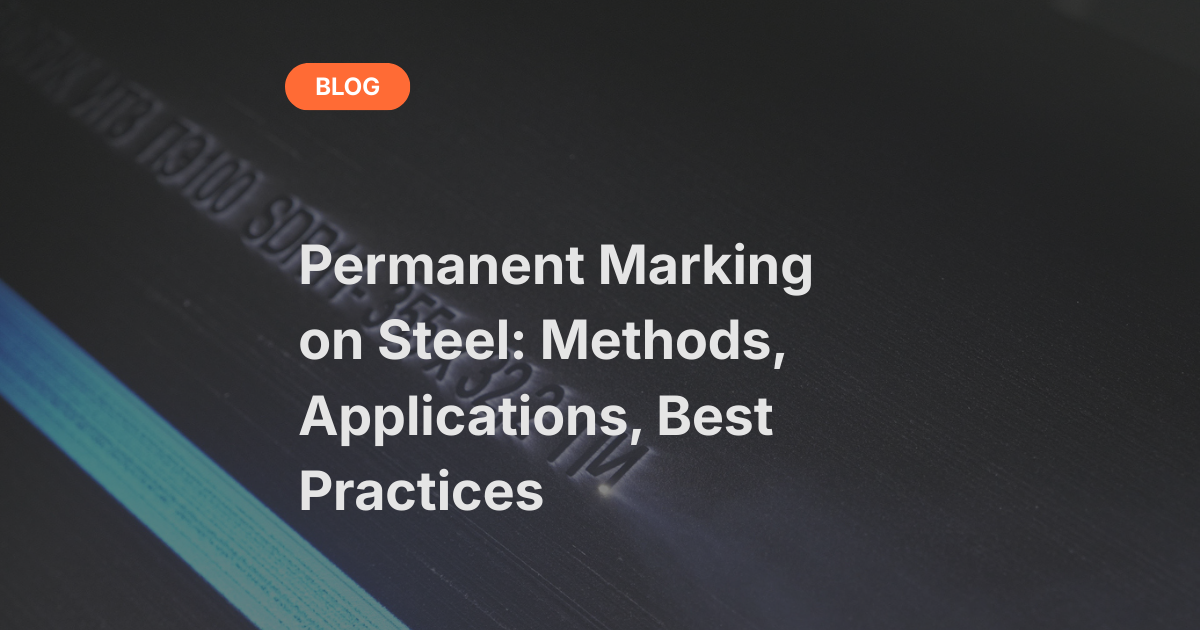
In industrial manufacturing, traceability and part identification are not optional — they are foundational to quality control, regulatory compliance, and operational efficiency. Whether you are producing fasteners, structural components, or precision-machined parts, the ability to reliably identify and track steel components throughout the supply chain is critical. This is where permanent marking on steel plays an essential role.
Why Marking Steel Components Matters
Steel parts move through complex supply chains, exposure to harsh environments, and multiple stages of processing. Surface identification must hold up under these conditions without fading, smearing, or delaminating. Stamped or engraved marks embedded directly into the metal surface ensure traceability from production to the end user — meeting industry standards such as ASTM, ISO, and ASME requirements.
For fastener manufacturers, valve producers, and structural fabricators alike, consistent part identification reduces errors, supports warranty claims, and streamlines inventory management.
Common Methods for Marking Steel
Several technologies are used across manufacturing environments, each suited to specific applications, production volumes, and material types:
- Dot Peen (Pin Stamping): A pneumatic or electric stylus creates a series of dots to form alphanumeric characters, logos, or barcodes. This method is ideal for high-throughput environments and produces deep, durable marks resistant to corrosion and abrasion.
- Roll Marking / Rotary Marking: A hardened die rolls across the steel surface under pressure, embossing characters into the material. This method is fast and highly repeatable, making it well-suited for cylindrical parts such as bolts, rods, and studs.
- Electrochemical Etching: An electrolyte solution and electrical current mark the surface without removing material. Best for thin-walled or hardened parts where surface stress is a concern.
- Laser Marking: A focused laser beam alters the surface finish or removes material. Precise and clean, though typically higher in capital cost and better suited for low-to-medium volume specialty applications.
- Hand Stamp / Impact Stamping: Traditional and cost-effective for low-volume or field applications, though less consistent than automated alternatives.
Industrial Applications Across Sectors
Across manufacturing industries, the need for reliable part identification spans a wide range of applications:
- Fastener manufacturing – Grade identification, manufacturer codes, and lot traceability stamped directly on bolt heads and nut faces
- Oil & gas components – Heat number and material certification marks on pipe fittings, flanges, and pressure-rated hardware
- Structural steel fabrication – Part numbers, specification codes, and inspection marks for structural assemblies
- Aerospace and defense – Serial numbers and compliance marks required by regulatory authorities
- Automotive and heavy equipment – VIN components, torque specifications, and part class identification
In each of these sectors, permanent marking on steel is a non-negotiable step in the production workflow — not an afterthought.
Best Practices for Steel Marking Operations
Achieving consistent, high-quality marks on steel requires attention to both machine setup and process discipline. Key best practices include:
- Match the method to the material: Hardened steels require methods that minimize surface stress; softer grades can accommodate deeper impression stamping.
- Standardize character depth and size: Inconsistent mark depth leads to quality rejections and readability issues downstream.
- Automate where volume demands it: Manual stamping introduces variability. Automated marking machines reduce operator dependency and improve throughput.
- Maintain tooling regularly: Worn dies and pins produce inconsistent marks. A routine tooling inspection schedule protects mark quality.
- Verify compliance requirements early: Know the applicable standard (ASTM A325, ISO 898, etc.) before selecting your marking method, as some specifications mandate specific techniques or minimum mark depths.
MSI’s Marking Machine Solutions
At MSI, our MarkMate® line of marking machines is purpose-built for the fastener industry and other high-volume steel part manufacturers. The MM-24 MarkMate® and AMM-24 AutoMarkMate® deliver fast, consistent roll marking that integrates directly into production lines — without complex programming or lengthy training. The Rotary MarkMate® is engineered specifically for cylindrical parts, ensuring uniform marks on bolts, rods, and round stock.
All MSI marking machines are manufactured in the USA, built to last decades, and supported by our responsive customer service team.
Contact Us
Contact us today to request a quote or speak with an expert!
5 Key Takeaways
- Permanent marking on steel is a compliance and traceability requirement across most regulated manufacturing sectors, not simply a cosmetic process step.
- Roll marking and dot peen stamping are the most common automated methods for high-volume fastener and steel component production.
- Matching your marking method to the material hardness and part geometry is critical to achieving consistent, specification-compliant results.
- Automating the marking process significantly reduces variability, operator dependency, and per-piece cost compared to manual stamping.
- MSI’s MarkMate® machines are designed specifically for fastener and steel part manufacturers, offering durable, easy-to-operate solutions built in the USA.
Frequently Asked Questions
Q: What is the most durable method of marking steel parts? Roll marking and dot peen stamping are among the most durable options, as both methods physically displace material to create recessed marks that resist wear, corrosion, and abrasion throughout the part’s service life.
Q: Are there industry standards that dictate how steel fasteners must be marked? Yes — standards such as ASTM A307, A325, A490, and ISO 898 specify required markings for fastener grade, manufacturer identification, and in some cases heat lot numbers; verifying the applicable standard before selecting a marking method is an important first step.
Q: Can automated marking machines handle different part sizes on the same production line? Many modern marking machines, including MSI’s MarkMate® series, can be configured with interchangeable tooling to accommodate a range of part diameters and lengths, minimizing changeover time between runs.
Q: How deep should a mark be to meet most manufacturing specifications? While requirements vary by standard, most specifications call for a minimum impression depth sufficient to remain legible after coating, plating, or heat treatment; your MSI representative can help confirm the correct depth for your application.
Q: What maintenance does a roll marking machine typically require? Routine maintenance primarily involves inspecting and replacing worn marking dies, keeping the machine clean of metal debris and lubricant buildup, and periodically verifying mark consistency against a control sample — all straightforward tasks that minimize downtime.